
VMS 564S · ARTSVIS 564S · CMAC 564S · ISS 555S
Physical Computing and the Internet of Things
A hands-on seminar in building interactive objects and exploring the artistic and social possibilities of networked devices.
Semesters taught
- Spring 2026
- Spring 2025
- Fall 2018
- Fall 2017
InstructorMark Olson
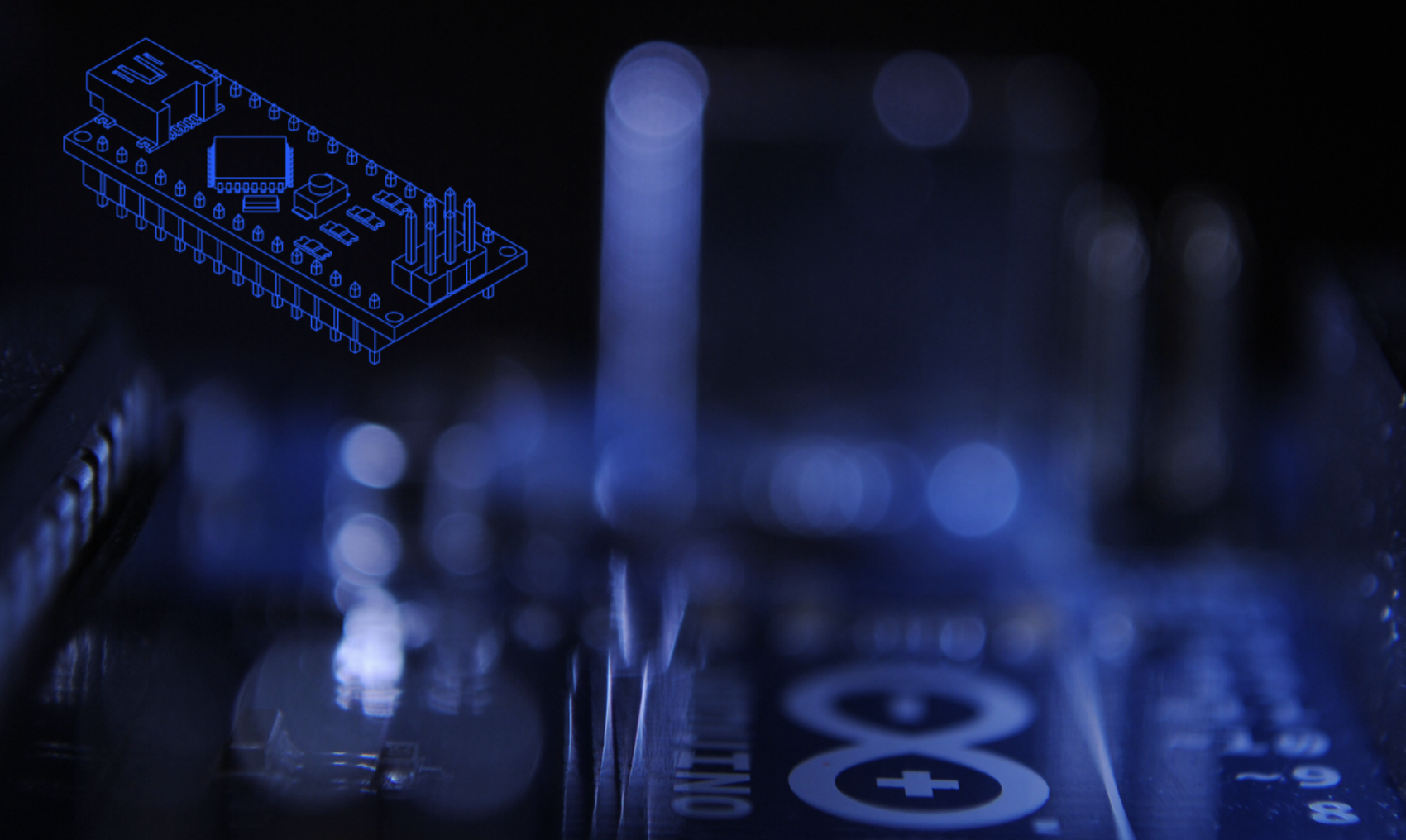
This course is a seminar on physical computing, critical making, and the critical and expressive affordances of the Internet of Things (IoT).
Since 2014, the number of online connected devices has exceeded the number of humans. The “Internet of Things” therefore represents a significant paradigm-shift in what it means to live in a networked society. This course considers the implications of this digital ecology and seeks to equip students with the conceptual and technical skills necessary for critical and creative engagement with so-called “smart things.”
This course has no prerequisites beyond a willingness to work hard, collaborate, iterate, tinker, play.
Learning Objectives
Over the course of the semester we will:
- experiment with the technical, critical, and artistic affordances of networked microcontrollers, sensors, and actuators;
- develop a working understanding of the fundamentals of electrical engineering, circuit design, cloud communication protocols, and CircuitPython programming for physical computing;
- discuss and debate the social, economic, environmental, and political implications of ubiquitous computing and the internet of things, such as dataveillance, media materiality and e-waste, post-human/non-human phenomenologies, and embodied interactivity;
- and creatively engage these issues and concepts through the lens of critical making, diy aesthetics, and prototypes-as-arguments.
How to Succeed in this Course
The course assumes no prior experience in programming, hardware, nor art making. What the course does assume is that you’ll put in the work to develop and expand your capacities with these practices throughout the semester. Both studio art courses and engineering courses share a common denominator: success in these classes requires that you put in the time and actually make stuff. In other words, there’s no substitute for learning by doing – whether it’s putting paint on canvas, ink on paper, wiring sensors to a microcontroller, or writing code, line by line. Aspirational “vaporware” or purely conceptual art won’t suffice in this class. Do the work.
Additionally, success in this course will involve iteration. For the semester project especially, leaving everything to the last minute hoping that diet Mountain Dew and sugar fueled allnighters will produce results is a recipe for failure. Immerse yourself in a practice of experimentation. Prototype early. Share work in progress for feedback. Set weekly milestones. Meet them.
Success in this course also involves collaboration: sharing of experience, point of view, expertise, feedback, critique. If you see someone struggling aesthetically, conceptually, or technically, reach out to lend a hand. Avoid mansplaining (no matter your gender identification) and other forms of asserting expertise at the cost of growth and learning. Learn how to ask good questions; learn how to teach rather than simply grab someone’s keyboard or breadboard. Share helpful resources and how you found them with the entire class.
Finally, success in this course hinges upon our ability as a class to develop a respectful culture of critique. This is perhaps the hardest thing to do, as we all have our egos on the line when we put our work out there for feedback. Over the course of the semester, we’ll continually work on our critical practice, ensuring that all voices are heard, and that everyone is pushed to grow technically and creatively.