
VMS 383
Disability Studies Meets Design
A critical engagement between disability studies and design practice, focused on disability justice, access, and speculative design methods.
Semesters taught
- Spring 2025
InstructorMark Olson
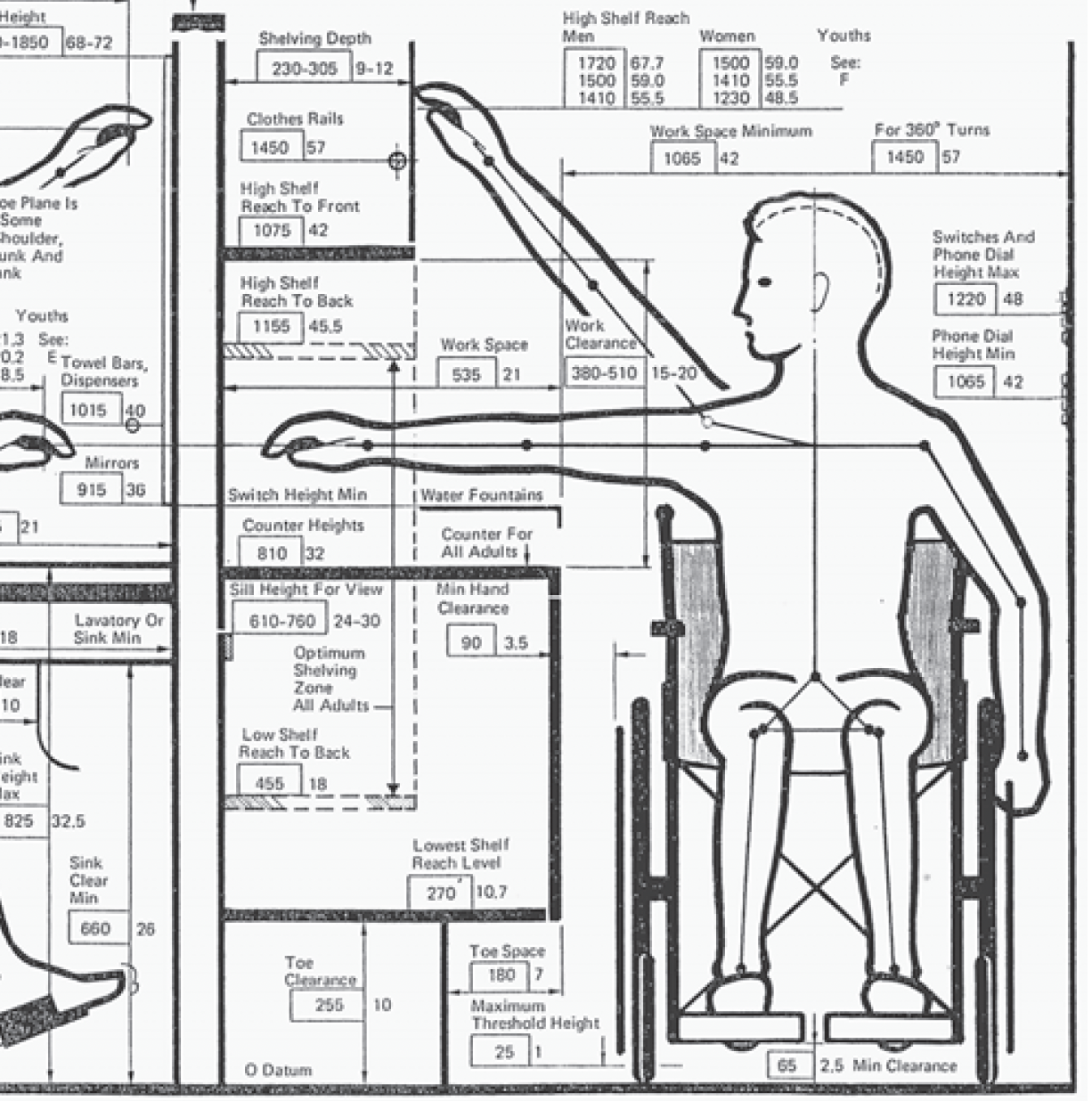
This course sets design practice and design thinking in conversation with the field of disability studies. The central focus is a critical assessment, through the lens of disability justice, of major design paradigms such as universal, participatory, speculative, and adversarial design.
About the Course
Writer, disability-justice activist, and performance artist Leah Lakshmi Piepzna-Samarasinha argues that “it’s radical to imagine that the future is disabled” and asks, “Have we ever imagined this, not just as a cautionary tale or a scary story, but as a dream?”
Disability ought to be an exciting subject for human-centered designers in all fields, from the arts and fashion to architecture, UI/UX, product design and engineering. It’s about the rich variety of lived experience, the wisdom generated by different ways of knowing and navigating the world, and how design practices grounded in an ethics of interdependence might build a better, more humane, and sustainable environment for all. And yet… disability is often framed as a problem, an afterthought, something to be “accommodated,” oftentimes reduced to “checking the box” of ADA compliance.
This course sets design practice and design thinking in conversation with the field of disability studies. Our focus will be a critical assessment, through the lens of disability justice, of the ethics and practices of major design paradigms (such as universal, participatory, speculative, and adversarial design) as well as the broader problem-solution orientation dominant in many fields of design and engineering.
How have ableism, the medicalization of disability, and ideologies of normativity shaped the history of design and design-thinking? And how might concepts and perspectives informed by disability justice -- or what Piepzna-Samarasinha calls “disability wisdom” -- and "crip epistemologies" (modes of being and knowing that center disability) vitally re-shape the future of design and the futures we dream of inhabiting?
Learning Objectives
- Identify and analyze different models of dis/ability at work in design discourse.
- Explain how a critical disability perspective reframes the "problem of design"
- Compare and evaluate different approaches to “design thinking” in the context of disability justice.
- Ideate and create a speculative design interventions that enacts critical disability perspectives.
- Operationalize disability justice in our learning community.